




The Hidden Face of Software: Why Do App Crashes Happen During Peak Sales and How to Avoid Them?
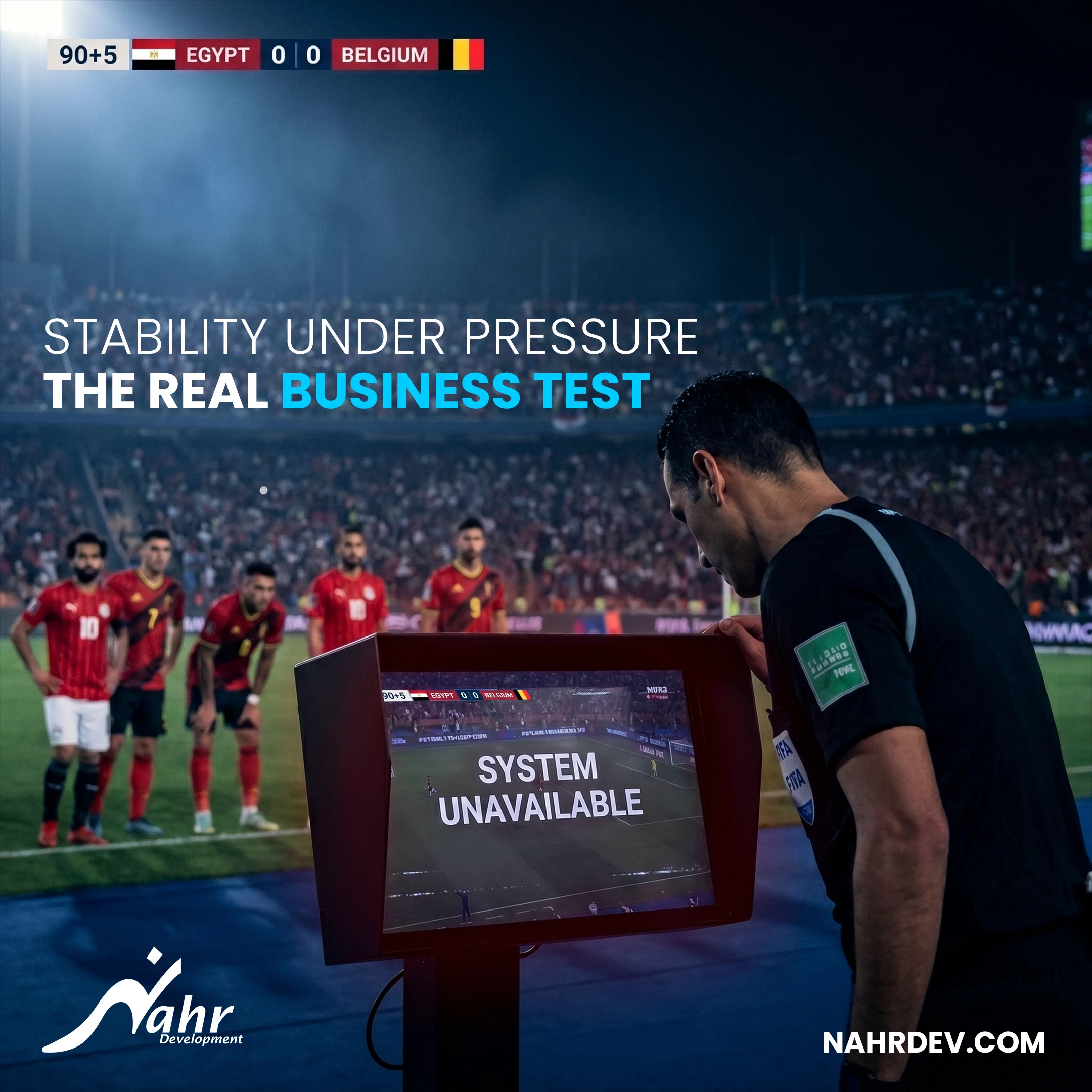
Imagine investing a massive budget in a highly successful marketing campaign that attracts thousands of eager customers in a single moment. Then, at the absolute critical minute of completing payments, a disastrous “System Unavailable” message appears. In reality, this catastrophic scenario is never merely a passing technical glitch; it is a fatal blow to your brand’s reputation. Therefore, executives must realize that app crashes during peak times are the direct consequence of ignoring stability engineering from day one. Consequently, focusing entirely on beautiful user interfaces without building a solid backend engine is an uncalculated investment risk.
On the other hand, the true test of any digital platform does not lie in how it operates during quiet, ordinary days. Instead, it becomes glaringly obvious when servers face sudden, exceptional pressure, such as major discount seasons like Black Friday. However, many business owners mistakenly believe that simply doubling cloud server space is the magical solution to prevent downtime. But, this misconception completely ignores structural flaws in the codebase that hinder efficient data processing.
Hence, investing in highly scalable architecture becomes an indispensable strategic decision. Furthermore, today’s fiercely competitive market demands delivering a user experience completely free of interruptions to protect your profit streams. As a result, software engineered to withstand maximum pressure transforms into a protective shield guarding your investments and ensuring your superiority over competitors in the most sensitive moments.
Root Causes: Why Do Sudden App Crashes Happen?
The core problem begins when massive digital projects are built with the simplistic mindset of basic informational websites. For example, relying heavily on a monolithic database architecture that attempts to process everything simultaneously. However, this rigid structure chokes instantly when thousands of users attempt to search, add products, and execute payments in the exact same second. Consequently, the server completely stops responding, leading to total app crashes.
Additionally, unoptimized code and heavy queries contribute to draining memory resources and processors destructively. As a result, pending requests accumulate, and the system’s capacity depletes rapidly, aligning with user experience reports from the Content Marketing Institute. Consequently, frustrated customers immediately leak to your competitors’ more stable platforms.
- Skipping rigorous load testing before launching marketing campaigns, making the crash a complete surprise to management.
- Complexly entangled programming operations where the failure of one minor sub-service brings down the entire system.
- Failing to configure servers for auto-scaling to seamlessly absorb sudden spikes and drops in traffic.
- Utilizing heavy, repetitive database queries that dramatically slow response times to critical levels.
- Neglecting caching technologies designed to relieve the burden on main servers during peak loads.
Financial Impact: The Hefty Cost of Technical Instability
The true cost of app crashes extends far beyond merely losing sales during downtime hours. When a customer is unable to complete their transaction during peak times, the Return on Investment (ROI) allocated for paid ads evaporates instantly. Therefore, you are paying heavy premiums to acquire customers who experience the worst possible digital journey, creating an immediate negative association with your brand. Consequently, costs multiply as you must deploy extensive public relations efforts to regain the trust of an angry audience.
For instance, a single minute of downtime for a giant e-commerce platform can translate to tens of thousands of dollars in lost revenue. Thus, saving on structural engineering budgets initially transforms into a harsh tax that management pays directly from net profits later. Ultimately, technical stability under pressure is the absolute cornerstone upon which the financial sustainability of any digital entity is built.
Engineering Principles for Business Continuity Under Pressure
Before even considering launching massive marketing campaigns, the platform must be engineered according to strict rules preventing bottlenecks. First, adopting Microservices Architecture, where payment services are completely isolated from browsing and customer databases. Second, implementing Load Balancing principles to distribute website visitors across multiple servers, preventing pressure concentration in a single node. Third, strict adherence to building asynchronous codes that prevent the system from freezing when processing complex external requests.
Nahr’s Proactive Methodology: Stress Testing and Auto-Scaling
1) Simulating Pressure and Maximum Stress Testing
The first step we execute is subjecting the system to a programmed phantom attack simulating the influx of tens of thousands of users in one second. Therefore, we monitor how memory and processors behave to detect bottlenecks before they actually occur in the live market. Consequently, we guarantee your platform will never be caught off guard by any future traffic volume.
2) Engineering Auto-Scaling Cloud Infrastructure
Next, we program cloud servers to expand automatically when visitor numbers surge, and contract when traffic normalizes. Since this expansion occurs programmatically, the system absorbs traffic explosions without any human intervention. Ultimately, your company only pays for the resources it actually consumes, slashing operational expenses and maximizing efficiency.
3) Optimizing Databases and Implementing Caching
This is where we intervene architecturally to reduce stress on the central database by saving repetitive data (like product images and pricing) in ultra-fast temporary memory. Because this data is delivered to new visitors in fractions of a second, speeds remain blazing fast. Thus, the primary server remains entirely dedicated to processing highly sensitive financial transactions without fatigue.
Technical Matrix: Fragile Systems vs. Resilient Architecture
| Operational Parameter | Traditional Systems (Fragile) | Resilient Architecture (Pressure-Resistant) |
|---|---|---|
| Response to Visitor Surges | Severe slowdown ending in complete server failure | Automatic resource scaling maintaining rapid response times |
| Failure Handling Mechanism | A minor bug in one section crashes the entire app | Smart service isolation; one part fails while the rest operates perfectly |
| Budget Consumption Efficiency | Paying for massive, underutilized servers year-round | Agile billing that correlates directly with actual resource consumption |
Nahr Development: Your Technical Shield During Peak Times
If you are looking to protect your marketing investments and ensure your platform never fails you when it is time to harvest profits, Nahr Development provides an impenetrable engineering shield. We do not just build web pages; we design digital engines capable of withstanding the fiercest marketing storms with absolute stability and supreme confidence.
Through our extensive experience, we provide you with an infrastructure immune to app crashes, whether you manage massive projects in ecommerce-store-development or rely heavily on sales channels via mobile-app-development-company-in-egypt. We guarantee server architecture that dynamically scales to meet your customers’ demands. Furthermore, this ironclad performance integrates perfectly with seo-company-in-egypt strategies, ensuring a continuous, stable flow of purchasing traffic without any technical hurdles.
Frequently Asked Questions on System Load Capacity
Why isn’t simply buying more server space enough to prevent platform crashes?
Scaling a server vertically (adding more RAM and CPUs) has a strict maximum limit that cannot be exceeded. Furthermore, if the source code is written poorly and contains logical bottlenecks, the larger server will choke exactly the same way, but at a significantly higher financial cost to the company.
What is Load Testing, and when should it be conducted?
Load Testing is a programmed simulation of thousands of visitors attacking the platform simultaneously to measure the absolute maximum capacity the system can endure before crashing. Therefore, this test must be conducted periodically, and it is strictly mandatory before launching any major marketing campaign or discount season to secure cash flows.
How does Microservices Architecture protect the website from total downtime?
This architecture dismantles the system into highly independent components working together. Consequently, if massive pressure causes the “notification system” to fail, the “payment gateway” and “product browsing” services remain perfectly functional, preventing total platform paralysis and saving your sales.
Conclusion: Technical Stability is the True Test of Success
In conclusion, we must realize that stability under pressure is the true indicator of infrastructural power, acting as the ultimate separator between market-leading companies and those that falter during critical moments. The phenomenon of app crashes is never inevitable destiny; rather, it is the direct result of engineering negligence and a lack of proactive architectural planning. Therefore, make performance testing and code quality an absolute red line that cannot be crossed, protecting your reputation and financial returns from evaporating in mere seconds.
Accordingly, if you are ready to abandon fragile systems and seek a technical architecture that matches your marketing ambitions while absorbing record-breaking sales with unwavering stability, start your journey today with the engineers at Nahr Development, and let smart technology be the faithful guardian of your successful investments.